Egg Collector: "The Efficient Egg Protection Essential"
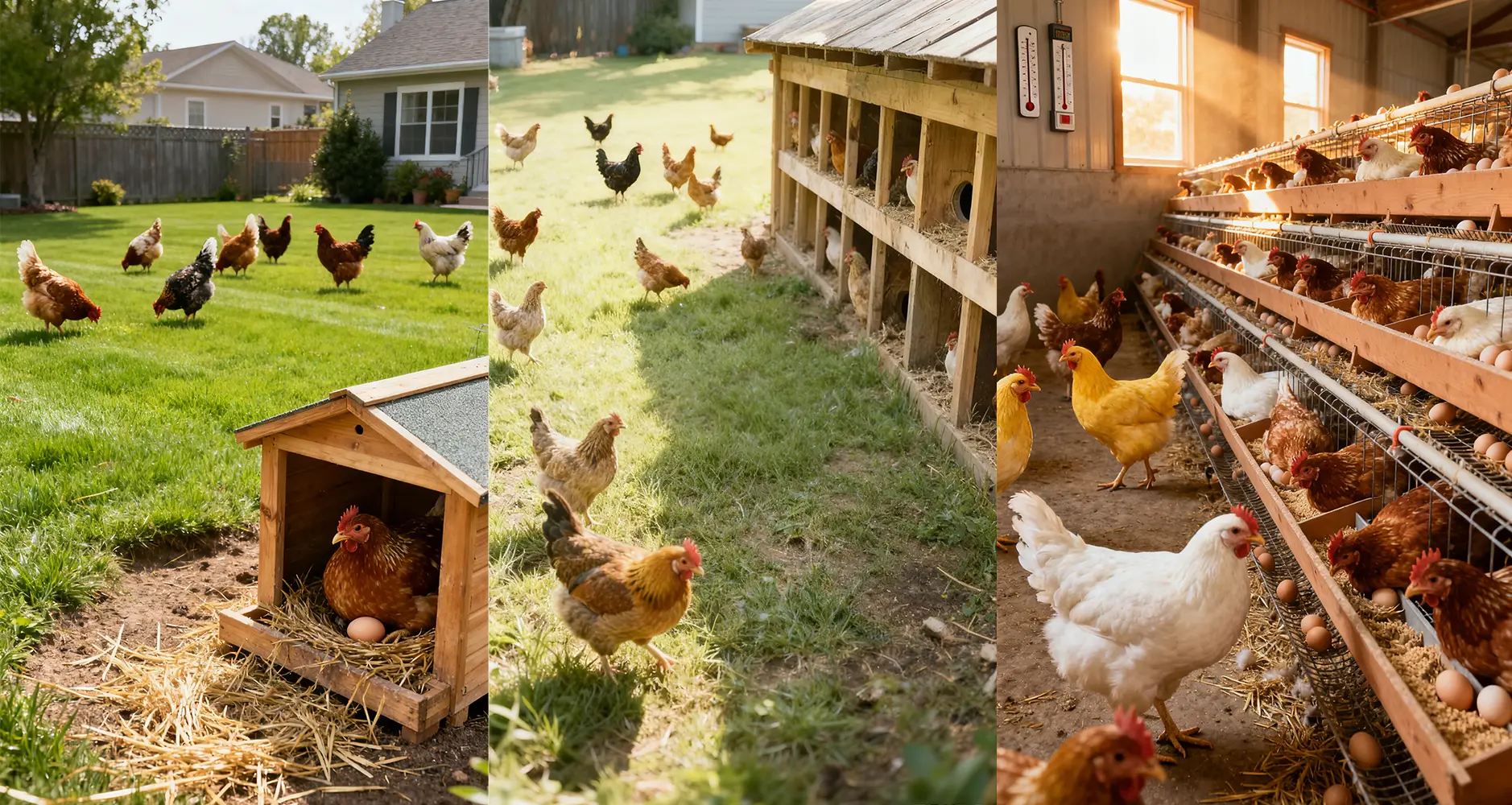
In the layer farming industry, egg collection is a critical daily task whose efficiency and safety directly impact breeding profitability. Traditional manual collection is not only time-consuming and labor-intensive but also prone to egg breakage and contamination due to improper operation, pecking, or scratching by hens. As a targeted solution, the egg collector, through scientific design and technology, serves as the core equipment connecting egg production and finished product storage.
I. Design Principle: Innovation Aligned with Laying Habits
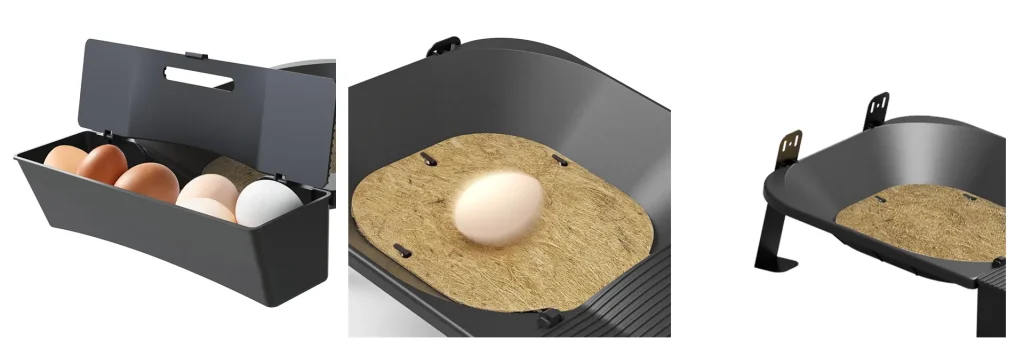
The core design of the egg collector revolves around “simulating a natural laying environment + collection protection.” Structurally, it mainly consists of three parts: an egg collection trough, a buffer pad, and an egg tray:
- Egg Collection Trough: Features a smooth surface with built-in anti-collision gaskets to prevent egg impact; the entire collector adopts a smooth panel inclined at 15-20°, matching the natural rolling behavior of eggs after hens lay them.
- Buffer Pad: Made of natural jute, it mimics the natural environment to help hens adapt quickly while reducing the impact force of eggs during rolling, controlling the breakage rate below 0.5%.
- Egg Tray: Enables non-daily collection while protecting eggs.
II. Application Scenarios: Flexible Adaptation Across All Farming Scales
The egg collector’s application scenarios have expanded from large-scale farms to household breeding, achieving full-scene coverage:
- Large-Scale Layer Farms: As core breeding equipment, most are used in chicken coops or cage systems. Parallel design of multiple collectors enables 24/7 uninterrupted collection, significantly reducing egg pecking and contamination.
- Small-to-Medium-Scale Farms: Boasts a simplified structure – the inclined trough storage box requires no complex installation and can be flexibly placed according to coop layout. It reduces labor costs while avoiding high investment in large equipment, making it a cost-effective choice for small-to-medium breeders.
- Household/Courtyard Breeding: Compact in size, small-scale collectors can be placed on the ground or wall-mounted. Their key advantages lie in simple operation and hygiene, solving the pain points of “difficult egg retrieval and high breakage” in household breeding, and adapting to scenarios such as urban farms and rural courtyards.
III. Core Advantages: Dual Value of Labor Savings and Egg Protection
Compared with traditional manual collection, the egg collector’s advantages are reflected in both efficiency and benefit dimensions:
- High Efficiency & Labor Savings: Manual collection requires daily effort, while semi-automatic collectors only need to be emptied once every 4-5 days, improving efficiency by 6-8 times. Large-scale farms can reduce collection labor by over 80%, and small-to-medium farms can free breeders from repetitive labor to focus on flock management.
- Egg Protection: Without a collector, exposed eggs are prone to pecking and collision, resulting in a breakage rate of 3%-5%. With the collector, eggs roll into the trough, controlling the breakage rate below 1%. Meanwhile, eggs do not come into contact with the ground or feces throughout the production-to-collection process, reducing the risk of Salmonella contamination and improving product qualification rates.
- Stability & Controllability: Enables timed and quantitative collection, facilitating accurate egg production statistics for breeders while protecting eggs.
The egg collector’s improvement in breeding efficiency is not a single-link optimization but a full-chain empowerment:
- Production Efficiency: Reduces collection time, labor costs, and losses from egg breakage and contamination, directly increasing net breeding profits.
- Management Efficiency: Accurate egg production data helps breeders promptly detect abnormal laying rates and early warning of disease risks; standardized collection processes ensure egg quality.
From family courtyards and small-to-medium farms to large-scale layer operations, semi-automatic egg collectors offer convenience, time savings, and reduced losses. Choosing a suitable egg collector enables the goal of “cost reduction, quality improvement, and efficiency enhancement” across all farming scales.